Other animals › Diadematidae
Blue-black Urchin
Echinothrix diadema
1,040 observations in the source records
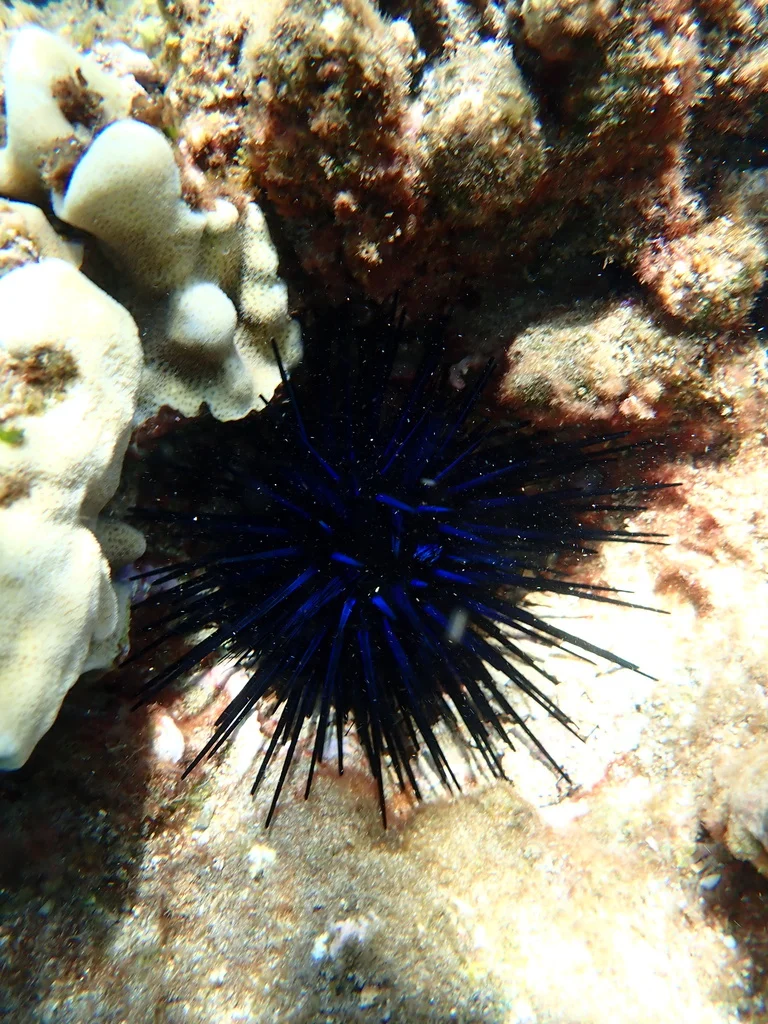


25 photos
Study shows up to four per card, from different observers, so you learn the species rather than one picture. Heart the good ones and swap any you do not like.
Photos you add are credited to you, and you keep the copyright.
What the records say
- 1,040 observations are recorded in the imported source snapshot. Observation source
Easily confused with
Indo-Pacific Rock-boring UrchinEchinometra mathaei
Banded Sea UrchinEchinothrix calamaris
Whitestripe urchin shrimpStegopontonia commensalis
Marbled ShrimpSaron marmoratus
Black Longspine UrchinDiadema setosum
- Codium geppiorum
Study checks a spoken answer against these, and tells you which one you named.
Where it is recorded
| Hawaii | 609 |
|---|---|
| United States | 311 |
| Kenya | 7 |
| Taiwan | 6 |
| Kwale | 6 |
| South Africa | 5 |
| KwaZulu-Natal | 5 |
| China | 4 |
| Taiwan Province | 4 |
| Pingtung County | 4 |
Counts show where people looked, not only where it lives.
Traits
Physical
- RegenerationCan regrow lost body partsFrom its classification
Classification
| Kingdom | Animals · Animalia |
|---|---|
| Phylum | Echinoderms · Echinodermata |
| Class | Sea Urchins, Sand Dollars, and Heart Urchins · Echinoidea |
| Order | Diadematoida |
| Family | Diadematidae |
| Genus | Echinothrix |
Sources
- Names, taxonomy and observation counts: www.inaturalist.org
- Photos and recordings: the creator and source are on each one.
- How much to rely on each source
Remember the name next time.
Practise Blue-black Urchin with real photos from different observers. Say the name out loud, and it comes back just before you would forget it.