Molluscs › Pharidae
Pacific Razor Clam
Siliqua patula
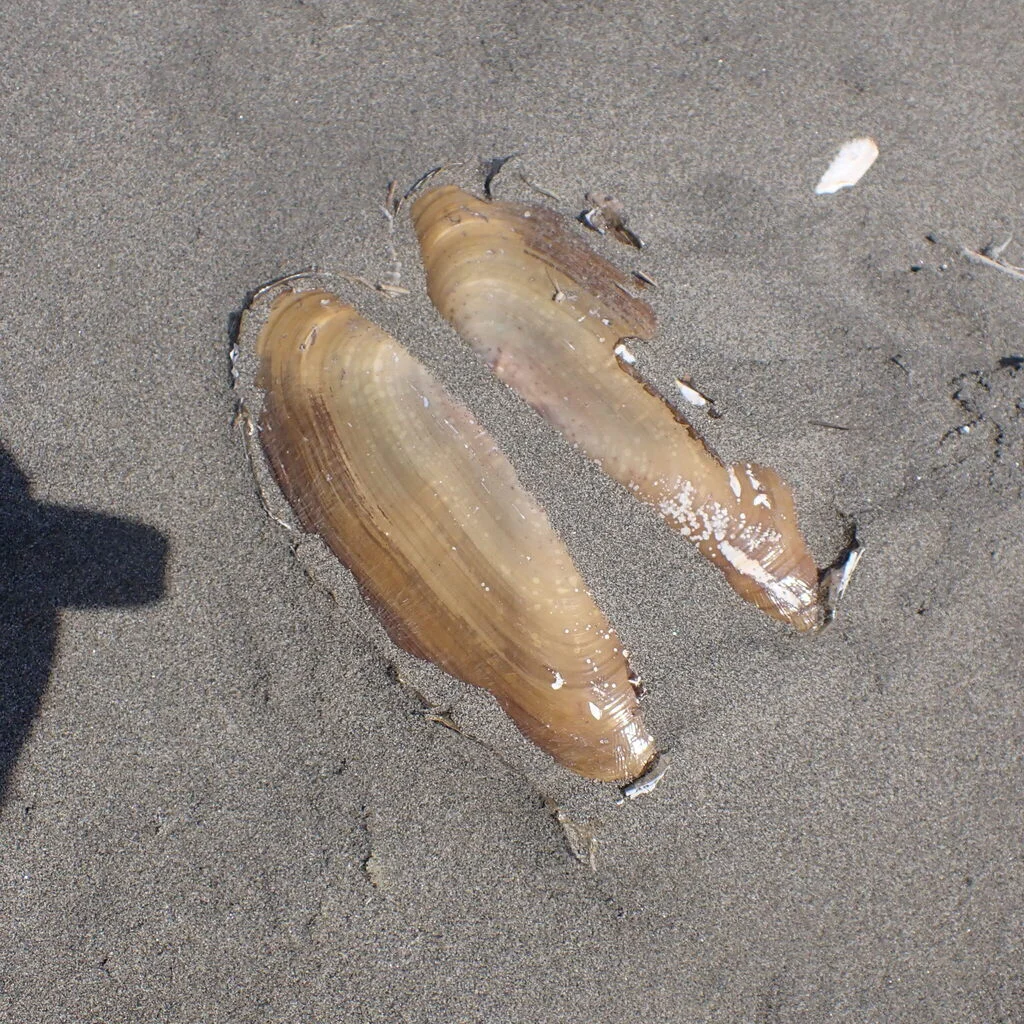


28 photos
Study shows up to four per card, from different observers, so you learn the species rather than one picture. Heart the good ones and swap any you do not like.
Photos you add are credited to you, and you keep the copyright.
Easily confused with
Transparent RazorSiliqua lucida
Alaska razorSiliqua alta
Sickle JacknifeSolen sicarius
California Jackknife ClamTagelus californianus
Lesser TagelusTagelus subteres
Straight Horse MusselModiolus rectus
Atlantic JackknifeEnsis leei
Atlantic RazorSiliqua costata
Study checks a spoken answer against these, and tells you which one you named.
Where it is recorded
| United States | 1,383 |
|---|---|
| Oregon | 692 |
| Washington | 581 |
| Canada | 395 |
| British Columbia | 395 |
| California | 339 |
| Alaska | 18 |
| District of Columbia | 1 |
| Maine | 1 |
Counts show where people looked, not only where it lives.
Traits
Physical
- Shell-bearingProtected by a hard shellFrom its classification
Group and habits
- Filter feederFeeds by filtering suspended food particles from water.From its classification
Classification
| Kingdom | Animals · Animalia |
|---|---|
| Phylum | Molluscs · Mollusca |
| Class | Bivalves · Bivalvia |
| Order | Rock-borers, Jacknives, and Razor Clams · Adapedonta |
| Family | Pharidae |
| Genus | Siliqua |
Sources
- Names, taxonomy and observation counts: www.inaturalist.org
- Photos and recordings: the creator and source are on each one.
- How much to rely on each source
Remember the name next time.
Practise Pacific Razor Clam with real photos from different observers. Say the name out loud, and it comes back just before you would forget it.