Plants › Mint Family
Big Betony
Betonica macrantha
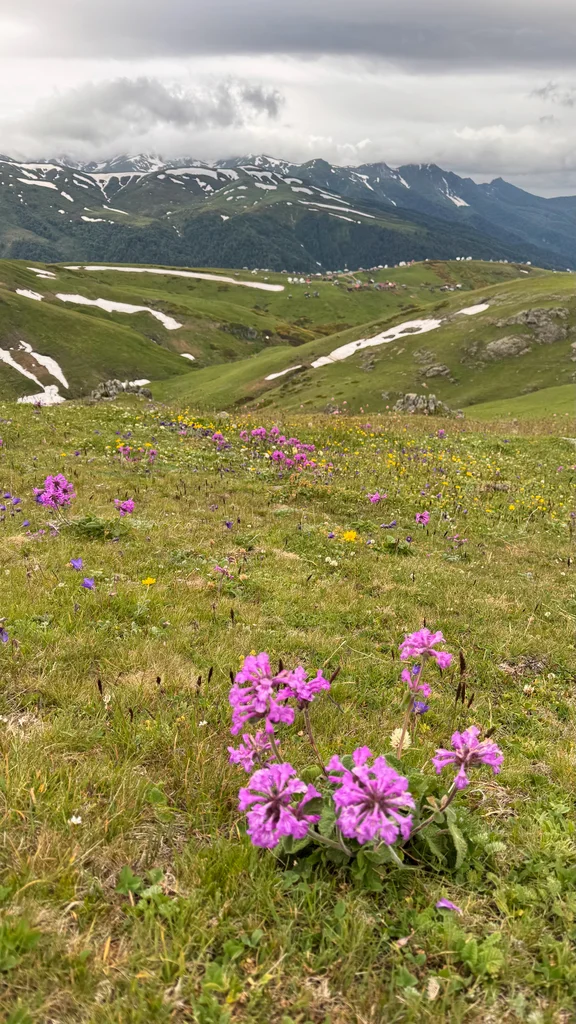


25 photos
Study shows up to four per card, from different observers, so you learn the species rather than one picture. Heart the good ones and swap any you do not like.
Photos you add are credited to you, and you keep the copyright.
Easily confused with
common hedge-nettleBetonica officinalis
Tuberous Jerusalem sagePhlomoides tuberosa
Spotted deadnettleLamium maculatum
ground-ivyGlechoma hederacea
Study checks a spoken answer against these, and tells you which one you named.
Where it is recorded
| United States | 1,199 |
|---|---|
| Alaska | 1,199 |
| Russia | 788 |
| Karachay-Cherkessia | 258 |
| Krasnodar Krai | 172 |
| Kabardino-Balkaria | 108 |
| Dagestan | 77 |
| Adygea | 61 |
| North Ossetia–Alania | 53 |
| Stavropol Krai | 20 |
Counts show where people looked, not only where it lives.
Traits
Group and habits
- Human edibleListed as edible by a harvested source. This is a research trait, not foraging advice.Kew World Checklist of Useful Plant Species
- Restoration or landscaping useListed as being used for restoration, landscaping, ornamental planting, erosion control, soil improvement, shade, windbreaks, pollution indicators, or wastewater purification.Kew World Checklist of Useful Plant Species
- Pollinator-associated plantDescends from a plant lineage commonly associated with pollinators.Inferred from its group
Edibility, toxicity and medicinal traits are records from datasets, not advice. Never eat, handle or use a wild species on the strength of an app.
Classification
| Kingdom | Plants · Plantae |
|---|---|
| Phylum | Vascular Plants · Tracheophyta |
| Class | Dicots · Magnoliopsida |
| Order | Mints, Plantains, Olives, and Allies · Lamiales |
| Family | Mint Family · Lamiaceae |
| Genus | Betonies · Betonica |
Sources
- Names, taxonomy and observation counts: www.inaturalist.org
- Photos and recordings: the creator and source are on each one.
- Traits: Kew World Checklist of Useful Plant Species (CC BY 4.0)
- How much to rely on each source
Remember the name next time.
Practise Big Betony with real photos from different observers. Say the name out loud, and it comes back just before you would forget it.