Fungi › boletes
Lurid Bolete
Suillellus luridus
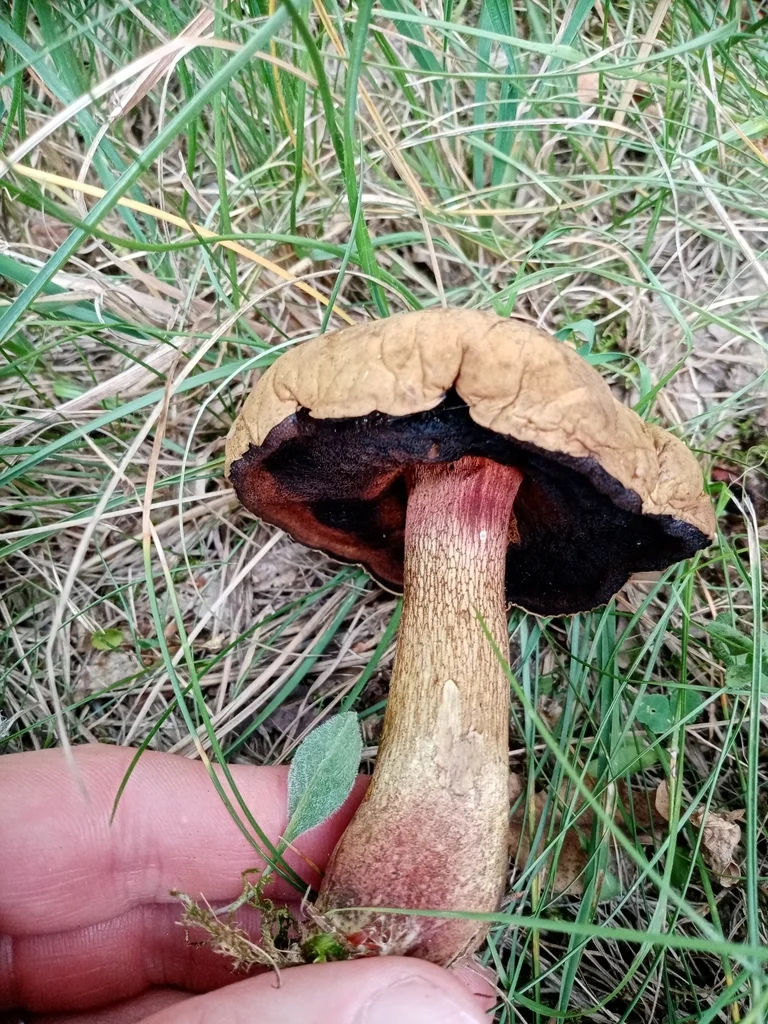


28 photos
Study shows up to four per card, from different observers, so you learn the species rather than one picture. Heart the good ones and swap any you do not like.
Photos you add are credited to you, and you keep the copyright.
Easily confused with
Dotted Stem BoleteNeoboletus erythropus
Suillellus mendax
Red-mouth BoleteNeoboletus subvelutipes
Devil's BoleteRubroboletus satanas
Deceiving BoleteSuillellus queletii
Liver BoleteSuillellus amygdalinus
Bitter BoleteTylopilus felleus
Bitter Beech BoleteCaloboletus calopus
Study checks a spoken answer against these, and tells you which one you named.
Where it is recorded
| United States | 7,762 |
|---|---|
| Alaska | 7,731 |
| Germany | 688 |
| Russia | 686 |
| Italy | 253 |
| Austria | 175 |
| Switzerland | 171 |
| United Kingdom | 166 |
| Nord-Est | 160 |
| England | 142 |
Counts show where people looked, not only where it lives.
Traits
Group and habits
- Human edibleListed as edible by a harvested source. This is a research trait, not foraging advice.FungiTastic metadata
- Bolete fungus formDescends from a fungal lineage whose members are typically boletes.Inferred from its group
- Mycorrhizal fungusDescends from a fungal lineage whose members commonly form mycorrhizal associations.Inferred from its group
Edibility, toxicity and medicinal traits are records from datasets, not advice. Never eat, handle or use a wild species on the strength of an app.
Classification
| Kingdom | Fungi Including Lichens · Fungi |
|---|---|
| Phylum | Basidiomycete Fungi · Basidiomycota |
| Class | Mushrooms, Bracket Fungi, Puffballs, and Allies · Agaricomycetes |
| Order | boletes and allies · Boletales |
| Family | boletes · Boletaceae |
| Genus | Suillellus |
Sources
- Names, taxonomy and observation counts: www.inaturalist.org
- Photos and recordings: the creator and source are on each one.
- Traits: FungiTastic metadata (BSD-3-Clause repository; dataset terms require verification)
- How much to rely on each source
Remember the name next time.
Practise Lurid Bolete with real photos from different observers. Say the name out loud, and it comes back just before you would forget it.