Fungi › Venturiaceae
black knot
Apiosporina morbosa
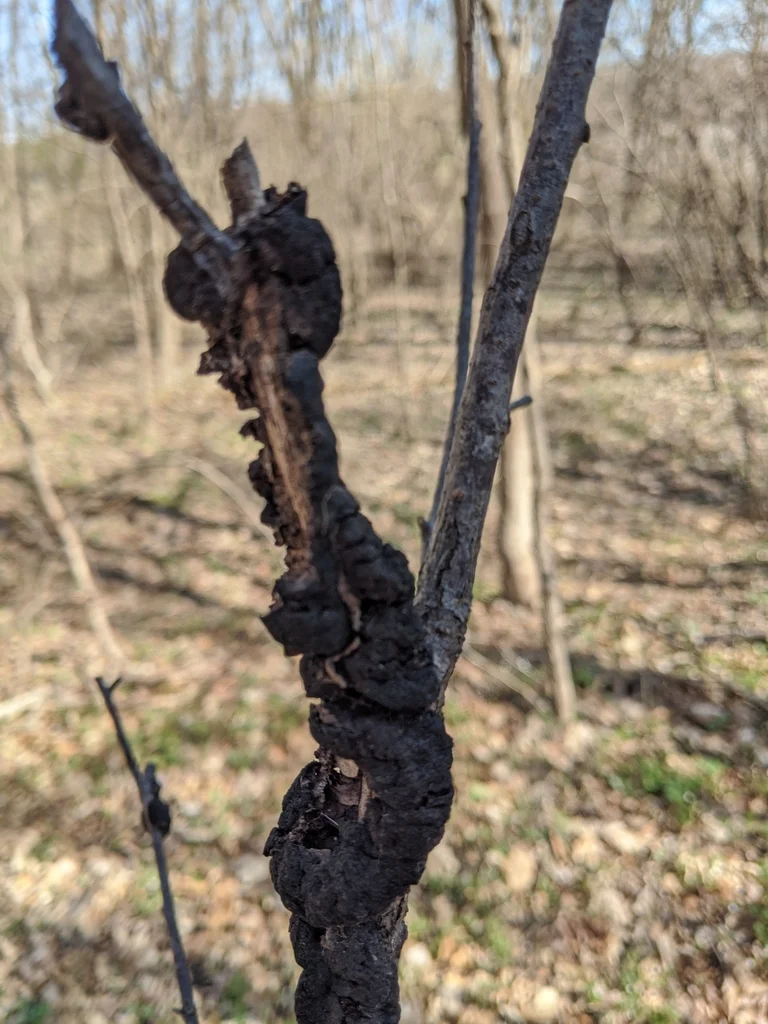


29 photos
Study shows up to four per card, from different observers, so you learn the species rather than one picture. Heart the good ones and swap any you do not like.
Photos you add are credited to you, and you keep the copyright.
Easily confused with
chagaInonotus obliquus
Honeydew EaterScorias spongiosa
Corky bark diseaseDiplodia tumefaciens
Black LeafApiosporina collinsii
Black Witches' ButterExidia glandulosa
Pine-oak gall rustCronartium quercuum
dead man's fingersXylaria polymorpha
Trichothecium roseum
Study checks a spoken answer against these, and tells you which one you named.
Where it is recorded
| United States | 13,121 |
|---|---|
| Canada | 8,654 |
| Ontario | 4,072 |
| Minnesota | 1,613 |
| Massachusetts | 1,588 |
| Alberta | 1,562 |
| Quebec | 1,289 |
| Wisconsin | 1,261 |
| New York | 1,124 |
| Pennsylvania | 943 |
Counts show where people looked, not only where it lives.
Traits
Group and habits
- Plant pathogenDescends from a fungal lineage whose members commonly parasitize or infect plants.FUNGuild fungal ecology database
Classification
| Kingdom | Fungi Including Lichens · Fungi |
|---|---|
| Phylum | Ascomycete Fungi · Ascomycota |
| Class | Dothideomycetes |
| Order | Venturiales |
| Family | Venturiaceae |
| Genus | Apiosporina |
Study it in a deck
- Fungi of Kootenay National Park, British Columbia, Canada
- Fungi of Prince George, British Columbia, Canada
Or build your own from the species near you.
Sources
- Names, taxonomy and observation counts: www.inaturalist.org
- Photos and recordings: the creator and source are on each one.
- Traits: FUNGuild fungal ecology database (License not stated by source)
- How much to rely on each source
Remember the name next time.
Practise black knot with real photos from different observers. Say the name out loud, and it comes back just before you would forget it.