Plants › bindweed family
common morning-glory
Ipomoea purpurea
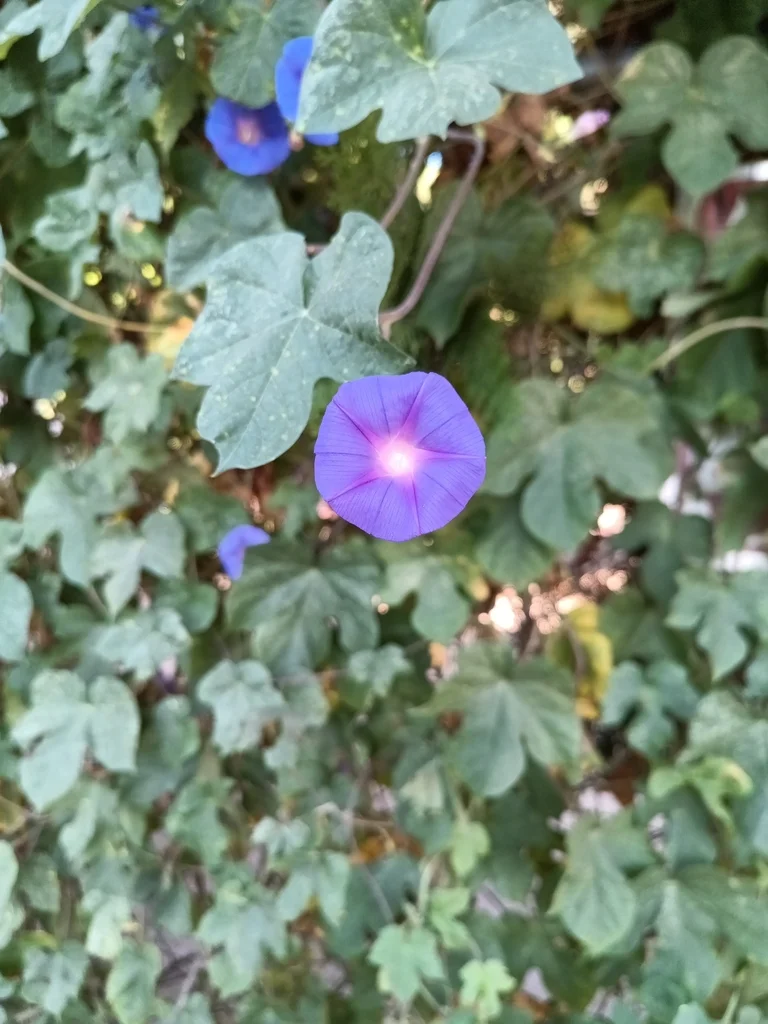


28 photos
Study shows up to four per card, from different observers, so you learn the species rather than one picture. Heart the good ones and swap any you do not like.
Photos you add are credited to you, and you keep the copyright.
Easily confused with
oceanblue morning gloryIpomoea indica
ivy-leaved morning-gloryIpomoea hederacea
American morning gloryIpomoea orizabensis
Japanese morning gloryIpomoea nil
railwaycreeperIpomoea dumetorum
Silky Morning GloryIpomoea pubescens
Ipomoea stans
Garden Morning GloryIpomoea tricolor
Study checks a spoken answer against these, and tells you which one you named.
Where it is recorded
| United States | 12,792 |
|---|---|
| Mexico | 5,971 |
| South Africa | 1,337 |
| Alaska | 1,286 |
| North Carolina | 1,082 |
| New York | 1,042 |
| Gauteng | 985 |
| Canada | 981 |
| Virginia | 883 |
| Mexico | 880 |
Counts show where people looked, not only where it lives.
Traits
Group and habits
- Human edibleListed as edible by a harvested source. This is a research trait, not foraging advice.Kew World Checklist of Useful Plant Species
- Toxic to humansListed as toxic or not suitable as food for humans by a harvested source.Kew World Checklist of Useful Plant Species
- Medicinal useListed as having medicinal use by a harvested source. This is not medical advice.Kew World Checklist of Useful Plant Species
- Material useListed as being used for materials such as wood, fiber, resin, gum, or oil.Kew World Checklist of Useful Plant Species
- Crop wild relativeListed as a crop wild relative or crop gene source by a harvested source.Kew World Checklist of Useful Plant Species
- Restoration or landscaping useListed as being used for restoration, landscaping, ornamental planting, erosion control, soil improvement, shade, windbreaks, pollution indicators, or wastewater purification.Kew World Checklist of Useful Plant Species
- Vine growth formListed by a harvested source as having a vine or climbing growth form.USDA PLANTS Characteristics
- Forb or herb growth formListed by a harvested source as having a forb or herbaceous growth form.USDA PLANTS Characteristics
- Annual plantListed by a harvested source as having an annual life duration.USDA PLANTS Characteristics
Edibility, toxicity and medicinal traits are records from datasets, not advice. Never eat, handle or use a wild species on the strength of an app.
Classification
| Kingdom | Plants · Plantae |
|---|---|
| Phylum | Vascular Plants · Tracheophyta |
| Class | Dicots · Magnoliopsida |
| Order | nightshades, bindweeds, gooseweeds, and allies · Solanales |
| Family | bindweed family · Convolvulaceae |
| Genus | morning-glories · Ipomoea |
Study it in a deck
- Edible in Baltimore County
- Medicinal Plants of Baltimore County
- Plants of Richmond city, Virginia, United States
- Plants of Shoalhaven, New South Wales, Australia
- Plants of Zaporizhia, Zaporizhia Oblast, Ukraine
- Survival in Maryland
- Trees of Maryland
Or build your own from the species near you.
Sources
- Names, taxonomy and observation counts: www.inaturalist.org
- Photos and recordings: the creator and source are on each one.
- Traits: Kew World Checklist of Useful Plant Species (CC BY 4.0)
- Traits: USDA PLANTS Characteristics (U.S. Government work / public domain)
- How much to rely on each source
Remember the name next time.
Practise common morning-glory with real photos from different observers. Say the name out loud, and it comes back just before you would forget it.