Plants › Sunflowers, Daisies, Asters, and Allies
Marguerite daisy
Argyranthemum frutescens
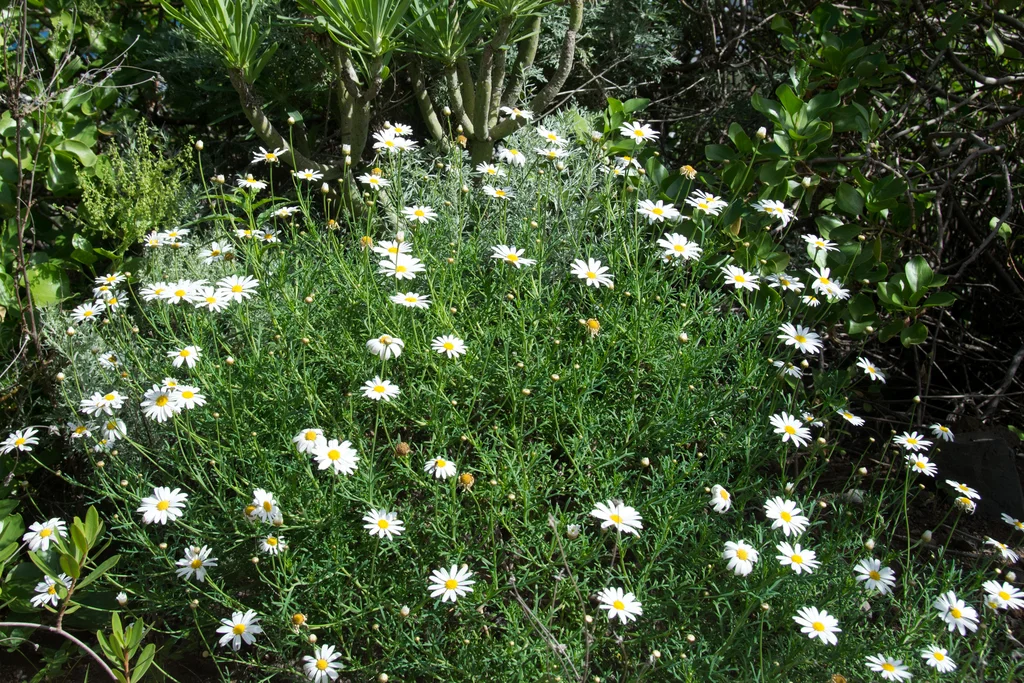


25 photos
Study shows up to four per card, from different observers, so you learn the species rather than one picture. Heart the good ones and swap any you do not like.
Photos you add are credited to you, and you keep the copyright.
Easily confused with
oxeye daisyLeucanthemum vulgare
Garland DaisyGlebionis coronaria
max chrysanthemumLeucanthemum maximum
garden cosmosCosmos bipinnatus
Mexican FleabaneErigeron karvinskianus
Stinking chamomileAnthemis cotula
Roman ChamomileChamaemelum nobile
Zawadzki's chrysanthemumChrysanthemum zawadzkii
Study checks a spoken answer against these, and tells you which one you named.
Where it is recorded
| Spain | 211 |
|---|---|
| Canarias | 211 |
| New Zealand | 186 |
| Wellington Region | 88 |
| Canterbury Region | 82 |
| United States | 48 |
| California | 31 |
| South Africa | 22 |
| Australia | 20 |
| Western Cape | 17 |
Counts show where people looked, not only where it lives.
Traits
Group and habits
- Restoration or landscaping useListed as being used for restoration, landscaping, ornamental planting, erosion control, soil improvement, shade, windbreaks, pollution indicators, or wastewater purification.Kew World Checklist of Useful Plant Species
- Forb or herb growth formListed by a harvested source as having a forb or herbaceous growth form.USDA PLANTS Characteristics
- Perennial plantListed by a harvested source as having a perennial life duration.USDA PLANTS Characteristics
- Pollinator-associated plantDescends from a plant lineage commonly associated with pollinators.Inferred from its group
Classification
| Kingdom | Plants · Plantae |
|---|---|
| Phylum | Vascular Plants · Tracheophyta |
| Class | Dicots · Magnoliopsida |
| Order | Sunflowers, Bellflowers, Fanflowers, and Allies · Asterales |
| Family | Sunflowers, Daisies, Asters, and Allies · Asteraceae |
| Genus | Argyranthemum |
Sources
- Names, taxonomy and observation counts: www.inaturalist.org
- Photos and recordings: the creator and source are on each one.
- Traits: Kew World Checklist of Useful Plant Species (CC BY 4.0)
- Traits: USDA PLANTS Characteristics (U.S. Government work / public domain)
- How much to rely on each source
Remember the name next time.
Practise Marguerite daisy with real photos from different observers. Say the name out loud, and it comes back just before you would forget it.